Flow Rate in Pressure Washers: What It Is and Is It Worth It?
As an Amazon Associate we earn from qualifying purchases. Links on this page are affiliate links.
Flow Rate Explained for Buyers
Flow rate is the volume of water a pressure washer moves through its pump each minute. You see it measured in gallons per minute, or GPM. This number matters just as much as pressure. Pressure pushes the water. Flow rate carries it away. Together, they determine how fast you clean a surface.
A higher GPM value means more water hits the surface. This helps rinse away dirt, mud, and snow melt quickly. If you have a low flow rate, the water stays on the surface longer. It can cause streaks or require you to go over the same spot multiple times. This slows down your work significantly.
You will see different GPM values on product listings. Common models offer 1.2 GPM, 2.3 GPM, 2.5 GPM, or 4.0 GPM. The 4.0 GPM model moves a large volume of water. It is ideal for large driveways or heavy grime. The 1.2 GPM model is lighter and uses less water. It suits small patios or delicate surfaces. The 2.3 GPM and 2.5 GPM options sit in the middle. They balance power and water usage for general tasks.
When you compare specs, look at both PSI and GPM. Pressure alone does not tell the whole story. A machine with high PSI but low GPM may clean a stain but leave residue behind. A machine with high GPM but lower PSI may rinse quickly but struggle with stuck-on dirt. You need both for effective cleaning.
Understanding flow rate explained helps you choose the right tool. It ensures you do not waste time rinsing. It also helps you manage your water supply. Check the GPM rating before you buy. Match it to the size of your project. This simple step saves you effort and time.
Flow Rate Options Compared
Flow Rate: 4.0 GPM
This high flow rate moves a large volume of water quickly. You will rinse debris and soap off surfaces much faster than with lower rates. The Simpson PowerShot 4400 PSI Gas Pressure Washer uses this spec. It suits contractors or serious homeowners who prioritize rapid debris removal. You benefit from heavy-duty cleaning tasks that require speed. The trade-off is higher water usage. You also need a gas engine to support this output. This model weighs 135 pounds, so it is not portable. Choose this if you clean large areas like driveways or decks frequently and want to minimize time spent rinsing.
Flow Rate: 2.5 GPM
A moderate flow rate balances pressure and water volume. The Westinghouse 3200 PSI Gas Pressure Washer offers this spec. It cleans decks and driveways efficiently without excessive water waste. This output fits buyers who need gas power but do not need the highest flow. You get a solid balance for medium to large outdoor cleaning tasks. The unit includes a soap tank and five nozzles. It weighs 63 pounds, making it manageable for most users. The trade-off is slower rinsing compared to 4.0 GPM models. You save water but spend slightly more time on large rinsing jobs. This is a practical choice for regular homeowners.
Flow Rate: 2.3 GPM
This flow rate sits between moderate and high output. You get decent cleaning speed with better water efficiency than the highest tier. While no specific product in the current list features this exact rate, it typically appears in mid-range electric or gas models. You benefit from faster rinsing than low-flow units without the high water consumption of industrial machines. The trade-off is often a compromise in overall power or pump durability. You might find this spec in units that prioritize compactness or electric operation. It suits users who want faster cleaning than basic models but do not need contractor-grade speed. Check the specific product specs to see if this rate fits your needs.
Flow Rate: 1.2 GPM
This low flow rate conserves water but cleans slowly. The Sun Joe Lightweight Electric Pressure Washer uses this spec. It is a compact option for light cleaning tasks where water conservation matters more than speed. You will not rinse heavy mud or large debris quickly. This unit weighs only 11.7 pounds, making it easy to store and move. It fits users with small spaces who do not need the power of gas models. The trade-off is significant time spent on rinsing. You must be patient with larger jobs. Choose this if you clean small areas like patio furniture or windows and want to minimize water usage.
Is Higher Flow Rate Worth It?
Who needs it
You should prioritize a higher flow rate if you clean large, dirty surfaces frequently. Models with 4.0 GPM move water quickly. This speed rinses away mud, pollen, and loose dirt much faster than slower units. If you wash siding, driveways, or decks often, the extra volume reduces scrubbing time. You will spend less time rinsing soap and debris. The Simpson PowerShot example shows how high flow aids heavy duty tasks. A 2.5 GPM unit also offers a solid balance for general home use. It handles moderate jobs without sacrificing too much speed. Choose a model with at least 2.3 GPM if you want efficiency. These rates keep water moving steadily. This matters when you have large areas to cover. Higher flow means you finish the job quicker. You avoid repetitive scrubbing. This saves your energy and time on big projects.
Who can skip it
You can ignore high flow rates if you only do light cleaning. A 1.2 GPM unit works fine for small tasks. Use it for washing cars, patio furniture, or small fences. The lower volume is sufficient for these jobs. You do not need to rinse large areas quickly. Prioritize pressure instead of flow for these tasks. High PSI removes stuck grime better than volume. A 2.3 GPM model is also fine for occasional use. It balances power and water usage well. You save water with lower flow rates. This is practical for small spaces. You do not need to rinse huge surfaces. Focus on maneuverability and weight if you clean infrequently. High flow models are often heavier and bulkier. They require more storage space. For light duty, a lower GPM is more manageable. You get the cleaning power you need without excess water volume. Stick to specs that match your actual workload.
Flow Rate Glossary
Gallons Per Minute
The standard unit for measuring flow rate. It tells you how many gallons of water the machine moves each minute. Higher numbers mean faster rinsing.
PSI
Pounds per Square Inch. This measures water pressure, or force. It helps blast away stuck-on grime. You need both PSI and GPM for effective cleaning.
Combined Cleaning Power
The result of multiplying PSI by GPM. This number gives a quick overview of total cleaning ability. A higher result usually means faster job completion.
Gas Pressure Washer
A machine powered by an internal combustion engine. These often offer higher flow rates than electric models. They are suitable for large, heavy-duty outdoor tasks.
Electric Pressure Washer
A machine powered by an electrical cord. These typically have lower flow rates. They are lighter and quieter, making them good for small decks or cars.
Rinsing Speed
How quickly water removes loose dirt, soap, or debris. High flow rates improve this speed. You spend less time rinsing large surfaces like driveways or siding.
Soap Application
Using low pressure to apply detergent. Flow rate matters here too. A steady stream helps cover more area. It ensures the soap penetrates dirt effectively before scrubbing.
Nozzle
The tip that attaches to the wand. It shapes the water spray. Different nozzles change the spray angle. This affects how you use the flow rate on surfaces.
Hose Length
The distance from the pump to the gun. Longer hoses let you reach farther. This helps when cleaning large areas. It reduces the need to move the machine often.
Intended Use
The main task for the machine. Washing a car needs less flow than cleaning a deck. Match the GPM to your typical jobs for best results.
Quick picks
| # | Product | Best for | Price |
|---|---|---|---|
| 1 | Simpson PowerShot 4400 PSI Gas Pressure Washer | fast rinsing and heavy-duty cleaning | Check price of Simpson PowerShot 4400 PSI Gas Pressure Washer on Amazon |
| 2 | Westinghouse 3200 PSI Gas Pressure Washer | medium to large outdoor cleaning tasks | Check price of Westinghouse 3200 PSI Gas Pressure Washer on Amazon |
| 3 | Sun Joe Lightweight Electric Pressure Washer | Light duty cleaning in small spaces | Check price of Sun Joe Lightweight Electric Pressure Washer on Amazon |
Our 3 picks
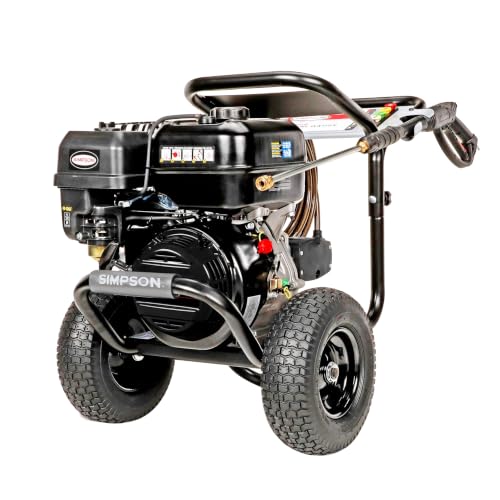
Simpson PowerShot 4400 PSI Gas Pressure Washer
Best for: fast rinsing and heavy-duty cleaning
- Flow Rate
- 4.0 GPM (what this guide is about)
- Maximum Pressure
- 4400 PSI
- Power Source
- Gas
- Engine Displacement
- 420cc
- Hose Length
- 50 ft
- Nozzle Count
- 5
View on Amazon: Simpson PowerShot 4400 PSI Gas Pressure Washer Affiliate link
This gas pressure washer delivers 4400 PSI at 4.0 GPM. The 4.0 GPM flow rate rinses debris faster than lower-flow models. It uses a CRX 420cc engine and an industrial triplex pump. The 50-foot hose and five nozzle tips cover most cleaning tasks. You will appreciate the welded steel frame and pneumatic tires for stability and movement on uneven ground.
Pros
- 4.0 GPM flow rate for fast rinsing
- 4400 PSI maximum pressure
- 50-foot high-pressure hose included
- Five quick-connect nozzle tips
- Industrial triplex plunger pump
Cons
- Heavy 135-pound build
- Does not ship to California
- Requires fuel management to avoid spillage
Good fit if
- You need a high flow rate for deck cleaning
- You require professional-grade pressure for paint prep
- You want a durable steel frame unit
Skip if
- You live in California
- You prefer lightweight electric models
- You need a compact storage size
Verdict: Simpson PowerShot 4400 PSI Gas Pressure Washer suits contractors and serious homeowners who prioritize a 4.0 GPM flow rate for rapid debris removal and heavy-duty cleaning tasks.

Westinghouse 3200 PSI Gas Pressure Washer
Best for: medium to large outdoor cleaning tasks
- Flow Rate
- 2.5 GPM (what this guide is about)
- Maximum Pressure
- 3200 PSI
- Power Source
- Gas
- Engine Displacement
- 212cc
- Hose Length
- 25 ft
- Nozzle Count
- 5
View on Amazon: Westinghouse 3200 PSI Gas Pressure Washer Affiliate link
The Westinghouse WPX3200 delivers 3200 PSI and 2.5 GPM for effective cleaning. This gas-powered unit features a 212cc engine and an axial cam pump. It includes a 25-foot hose and five quick-connect nozzles. The onboard soap tank holds half a gallon. You get a steel frame with 12-inch wheels for easy transport. This setup suits large outdoor areas like decks and driveways.
Pros
- 2.5 GPM flow rate cleans faster than lower GPM models
- 3200 PSI provides strong cleaning power for tough grime
- Includes 25-foot hose and five quick-connect nozzles
- Onboard half-gallon soap tank for convenient detergent use
- Heavy-duty steel frame with 12-inch never-flat wheels
Cons
- Heavier at 63 pounds, making it less portable than electric models
- Manual recoil start requires physical effort to operate
- 25-foot hose may limit reach for large properties without extensions
Good fit if
- You need higher flow rates for faster rinsing of large surfaces
- You prefer gas power for mobility without cord restrictions
- You want a dedicated soap tank for cleaning applications
Skip if
- You prioritize lightweight equipment for easy storage and transport
- You want electric power for quieter operation and zero emissions
- You need a high-flow unit exceeding 2.5 GPM for industrial tasks
Verdict: The Westinghouse WPX3200 3200 PSI Gas Pressure Washer offers a solid balance of pressure and flow for homeowners. Its 2.5 GPM output cleans decks and driveways efficiently. It fits buyers who need gas power and onboard soap storage.

Sun Joe Lightweight Electric Pressure Washer
Best for: Light duty cleaning in small spaces
- Flow Rate
- 1.2 GPM (what this guide is about)
- Maximum Pressure
- 1600 PSI
- Power Source
- Corded electric
- Color
- Black
- Dimensions
- 12 × 9.8 × 19 inches
- Weight
- 11.7 pounds
View on Amazon: Sun Joe Lightweight Electric Pressure Washer Affiliate link
The Sun Joe SPX1000 is a compact electric pressure washer designed for light to medium duty tasks. It delivers 1600 PSI of pressure at a flow rate of 1.2 GPM. This low flow rate means it rinses slowly but uses less water. Weighing 11.7 pounds, it is lightweight and portable. It includes a 20-foot hose and adjustable spray wand. This unit suits users with small outdoor areas who prioritize storage ease over cleaning speed.
Pros
- 1600 PSI maximum pressure for basic cleaning
- 1.2 GPM flow rate conserves water
- 11.7-pound lightweight design for easy storage
- Adjustable spray wand with twist nozzle
Cons
- 1.2 GPM flow rate is significantly slower than competitors
- 20-foot hose length limits reach
- 1600 PSI is low for heavy grime removal
Good fit if
- You need a lightweight washer for small balconies or patios
- You prioritize low water consumption over fast cleaning
- You clean delicate surfaces like outdoor furniture or siding
Skip if
- You need to clean large driveways or decks quickly
- You require high flow rates for efficient rinsing
- You want to tackle heavy duty jobs like RV cleaning
Verdict: Sun Joe SPX1000 1600 PSI Electric is a compact option for light cleaning tasks where water conservation matters more than speed. It fits users with small spaces who do not need the power of gas models.
Specifications side by side
| Spec | Simpson PowerShot 4400 PSI Gas Pressure Washer | Westinghouse 3200 PSI Gas Pressure Washer | Sun Joe Lightweight Electric Pressure Washer |
|---|---|---|---|
| Maximum Pressure | 4400 PSI | 3200 PSI | 1600 PSI |
| Flow Rate | 4.0 GPM | 2.5 GPM | 1.2 GPM |
| Power Source | Gas | Gas | Corded electric |
| Engine Displacement | 420cc | 212cc | not stated |
| Hose Length | 50 ft | 25 ft | not stated |
| Nozzle Count | 5 | 5 | not stated |
| Pump Type | Triplex plunger | Axial cam | not stated |
| Pressure | 4400 PSI | 3200 PSI | not stated |
| Intended Use | not stated | Cars, Patios, Homes, Driveways, Fences, Furniture | not stated |
| Features | not stated | Soap Tank | not stated |
| Color | Black | Blue/Black | Black |
| Dimensions | 8 × 3 × 50 inches | 21 × 19.5 × 39 inches | 12 × 9.8 × 19 inches |
| Weight | 135 pounds | 63 pounds | 11.7 pounds |
| Size | 4400 psi At 4.0 GPM | 3200 PSI and 2.5 GPM, Soap Tank and Five Nozzle Set | No Size |
| Model | PS60843 | WPX3200 | SPX1000 |
Frequently asked questions
How does flow rate affect cleaning speed?
Higher flow rates rinse debris away faster. The Simpson PowerShot 4400 PSI Gas Pressure Washer delivers 4.0 GPM. This volume removes dirt quickly. Lower rates take longer to clear surfaces. You will spend less time rinsing large areas with higher GPM models.
Is 2.5 GPM enough for a driveway?
Yes, 2.5 GPM handles most driveway tasks efficiently. The Westinghouse 3200 PSI Gas Pressure Washer offers this flow rate. It balances pressure and water volume. This setup cleans decks and driveways effectively without requiring the highest flow available for smaller jobs.
What GPM is best for small spaces?
Lower flow rates suit compact cleaning tasks. The Sun Joe Lightweight Electric Pressure Washer provides 1.2 GPM. This unit conserves water while handling light duties. It fits users with limited space who do not need the power or volume of gas-powered machines.
Does higher GPM mean more pressure?
No, GPM and PSI measure different things. Flow rate is water volume. Pressure is the force of the stream. The Simpson model has 4400 PSI and 4.0 GPM. The Westinghouse has 3200 PSI and 2.5 GPM. Both specs matter for performance.
Can I use soap with any flow rate?
You can use soap with various flow rates. The Westinghouse 3200 PSI Gas Pressure Washer includes an onboard soap tank. This feature helps apply detergent during cleaning. Other models may require a separate attachment. Check the specifications for integrated storage options.
How much does a pressure washer weigh?
Weight varies by power source and size. The Simpson PowerShot weighs 135 pounds due to its gas engine and high output. The Westinghouse model is lighter at 63 pounds. The Sun Joe unit is the lightest at 11.7 pounds for portability.
What is the difference between gas and electric flow?
Gas models typically offer higher flow rates. The Simpson gas unit provides 4.0 GPM. The Sun Joe electric model offers 1.2 GPM. Gas engines drive larger pumps for more water volume. Electric units prioritize compactness and lower water usage for light tasks.