Briggs & Stratton vs SIMPSON: Pressure Washers Compared by Specs
As an Amazon Associate we earn from qualifying purchases. Links on this page are affiliate links.
When you compare a SIMPSON vs briggs stratton pressure washer, you are looking at two distinct approaches to cleaning. Both brands offer machines designed to remove dirt and grime from outdoor surfaces. The main difference lies in their power source and performance output. One uses electricity for lighter tasks, while the other relies on gas for heavy-duty work. This guide breaks down the specs to help you decide which fits your needs.
Key differences
| Aspect | Briggs & Stratton 1800 PSI Electric Pressure Washer | Simpson PowerShot 3300 PSI Gas Pressure Washer |
|---|---|---|
| Power Source | Electric | Gas |
| Maximum Pressure | 1800 PSI | 3300 PSI |
| Flow Rate | 1.2 GPM | 2.5 GPM |
| Hose Length | 20 feet | 25 feet |
| Weight | 26.5 pounds | 74.8 pounds |
| Nozzle Count | not listed | 5 |
Which one should you choose?
Choose Briggs & Stratton 1800 PSI Electric Pressure Washer if
- You need a lightweight machine for small jobs like patio furniture or bicycles.
- You want to avoid gas maintenance and fuel storage.
- You have limited storage space and need a compact unit.
Choose Simpson PowerShot 3300 PSI Gas Pressure Washer if
- You require high pressure for cleaning decks, driveways, or siding.
- You need a higher flow rate to rinse surfaces quickly.
- You want a machine with pneumatic tires for rough terrain.
Verdict: The Briggs & Stratton model suits light residential tasks where portability matters. The SIMPSON unit is better for heavy-duty cleaning where power and speed are essential. Choose based on the scale of your projects.
Briggs vs Simpson Spec Comparison
power source
The Briggs & Stratton model relies on electric power, making it suitable for standard household outlets. This eliminates the need for fuel management and reduces maintenance requirements for light tasks. In contrast, the SIMPSON unit uses a Honda GX200 gas engine. This power source delivers higher performance and mobility, allowing you to clean large areas without being tethered to an electrical cord. Gas engines also provide consistent power regardless of outlet availability, which is crucial for professional or extensive outdoor cleaning jobs.
pressure
Pressure determines the force with which water hits surfaces. The Briggs & Stratton pressure washer generates 1800 PSI. This level is adequate for cleaning decks, patio furniture, and cars. The SIMPSON machine produces 3300 PSI, a significantly higher output. This increased pressure allows for faster removal of stubborn grime, paint, and deep-set dirt from concrete driveways and heavy equipment. If you require aggressive cleaning power for tough surfaces, the higher PSI of the SIMPSON unit offers a clear advantage in efficiency and effectiveness.
flow rate
Flow rate, measured in gallons per minute, affects how quickly you can rinse away debris. The Briggs & Stratton unit has a flow rate of 1.2 GPM. This lower rate is typical for electric models and conserves water during light cleaning. The SIMPSON gas washer delivers 2.5 GPM, more than double the flow. Higher flow rates rinse surfaces faster and help carry away loosened dirt more effectively. For large areas like driveways or siding, the superior flow rate of the SIMPSON model reduces total cleaning time significantly.
hose length
Hose length impacts your reach and mobility during cleaning. The Briggs & Stratton includes a 20-foot flexible hose. This length is sufficient for most residential tasks around a single car or small patio. The SIMPSON model comes with a 25-foot Morflex hose. The extra five feet provides greater reach, allowing you to access distant areas without frequently moving the machine. Both hoses are designed to withstand high pressure, but the extended length of the SIMPSON hose offers better flexibility for larger workspaces.
nozzle count
Nozzles determine the spray pattern and intensity for different cleaning tasks. The Briggs & Stratton data does not specify the number of included nozzles, so you should check the packaging for details. The SIMPSON unit includes five quick-connect tips, covering 0, 15, 25, and 40-degree angles plus a soap nozzle. This variety allows you to switch between stripping paint, cleaning delicate surfaces, and applying detergent without needing additional accessories. The comprehensive set on the SIMPSON model provides more versatility for diverse cleaning needs.
Choose the Right Pressure Washer for You
Light duty homeowner with standard outlet
You need a compact electric unit for light tasks. This Briggs & Stratton model delivers 1800 PSI and 1.2 GPM. It weighs only 26.5 pounds and fits in small spaces. The 20-foot hose is sufficient for patios and cars. It requires no fuel management, making it ideal for occasional use.
Professional contractor needing high power
You require serious cleaning power for decks, driveways, and siding. This Simpson unit provides 3300 PSI and 2.5 GPM for faster results. The Honda GX200 engine ensures reliable performance. It includes five quick-connect tips for various surfaces. The 25-foot hose and pneumatic tires handle tough job sites with ease.
User cleaning large areas quickly
Flow rate matters more than pressure for large jobs. This gas model offers 2.5 GPM, rinsing debris twice as fast as the 1.2 GPM electric option. The triplex plunger pump is built for long service life. You get professional-grade mobility with 10-inch tires and a durable welded steel frame for heavy transport.
The products compared
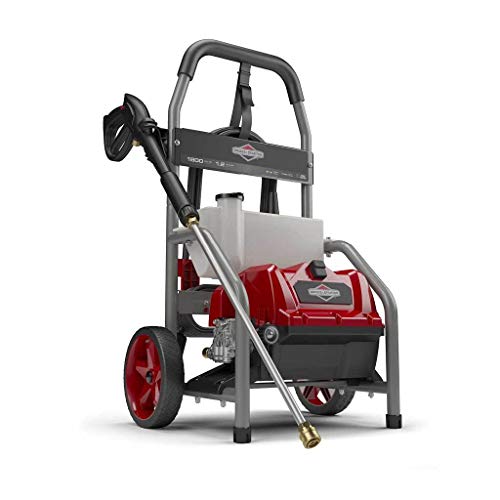
Briggs & Stratton 1800 PSI Electric Pressure Washer
Best for: light-duty home cleaning tasks
- Maximum Pressure
- 1800 PSI
- Flow Rate
- 1.2 GPM
- Power Source
- Electric
- Hose Length
- 20 feet
- Dimensions
- 15.5 × 18.8 × 34.5 inches
- Weight
- 26.5 pounds
View on Amazon: Briggs & Stratton 1800 PSI Electric Pressure Washer Affiliate link
This Briggs & Stratton electric pressure washer delivers 1800 PSI and 1.2 GPM. It weighs 26.5 pounds and measures 15.5 by 18.8 by 34.5 inches. The unit includes a 20-foot hose and an integrated detergent tank. You will find it suitable for light cleaning tasks around the home. The electric motor offers a long-life design. It is a compact option for users who prefer corded power over gas engines.
Pros
- 1800 PSI maximum pressure output
- 1.2 GPM flow rate for steady cleaning
- 20-foot flexible hose for extended reach
- Integrated detergent tank for soap application
- Lightweight 26.5-pound build for easy handling
Cons
- Lower 1800 PSI pressure compared to gas competitors
- Electric power source limits mobility
- 1.2 GPM flow rate is modest for heavy jobs
Good fit if
- You need a lightweight machine for patio or deck cleaning
- You prefer electric power for quieter, emission-free operation
- You have access to an outdoor electrical outlet
Skip if
- You require high-pressure cleaning for concrete or driveways
- You need to wash large areas without cord constraints
- You want a flow rate above 1.5 GPM
Verdict: Briggs & Stratton 1800 PSI Electric is a compact, lightweight option for light household cleaning tasks. It fits you best if you prioritize portability and quiet operation over raw power.

Simpson PowerShot 3300 PSI Gas Pressure Washer
Best for: heavy-duty cleaning tasks
- Maximum Pressure
- 3300 PSI
- Flow Rate
- 2.5 GPM
- Power Source
- Gas
- Hose Length
- 25'
- Nozzle Count
- 5
- Pump Type
- triplex plunger
View on Amazon: Simpson PowerShot 3300 PSI Gas Pressure Washer Affiliate link
This gas-powered pressure washer delivers 3300 PSI and 2.5 GPM for heavy-duty cleaning tasks. It features a Honda GX200 engine and a maintenance-free triplex plunger pump. The unit includes a 25-foot hose and five quick-connect tips. Its 77-pound frame sits on 10-inch pneumatic tires for mobility. You will find this machine suitable for contractors or homeowners needing high pressure and flow.
Pros
- Honda GX200 engine with low-oil shutdown
- 3300 PSI and 2.5 GPM output
- 25-foot Morflex hose resists kinks
- Five quick-connect nozzle tips included
- 10-inch pneumatic tires for smooth rolling
Cons
- Heavier at 77 pounds than electric models
- Not available for sale in California
- Requires gas and oil maintenance
Good fit if
- You need high pressure for decks or driveways
- You want a Honda engine for reliability
- You prefer gas power for mobility
Skip if
- You live in California
- You want a lightweight electric unit
- You need quiet operation for neighborhoods
Verdict: SIMPSON PowerShot 3300 PSI Gas offers professional-grade power with a Honda engine and triplex pump. It fits contractors or serious homeowners who prioritize cleaning speed and durability over portability and quiet operation.
Specifications side by side
| Spec | Briggs & Stratton 1800 PSI Electric Pressure Washer | Simpson PowerShot 3300 PSI Gas Pressure Washer |
|---|---|---|
| Maximum Pressure | 1800 PSI | 3300 PSI |
| Flow Rate | 1.2 GPM | 2.5 GPM |
| Power Source | Electric | Gas |
| Hose Length | 20 feet | 25' |
| Nozzle Count | not stated | 5 |
| Pump Type | not stated | triplex plunger |
| Pressure | 1800 PSI | not stated |
| Color | Red/Gray/Titanium | Black |
| Dimensions | 15.5 × 18.8 × 34.5 inches | 21 × 24 × 34 inches |
| Weight | 26.5 pounds | 74.8 pounds |
| Size | 1800 psi 1.2 Gallon | 3300 PSI |
| Model | 20680 | PS3228 - S |
Frequently asked questions
Which pressure washer is better for light home cleaning?
The Briggs & Stratton 1800 PSI Electric Pressure Washer is the better choice for light home cleaning tasks. It delivers 1800 PSI and 1.2 GPM, which is sufficient for patios and cars. Its compact design weighs only 26.5 pounds, making it easy to store and move around your property.
Does SIMPSON offer a gas-powered pressure washer?
Yes, the SIMPSON PowerShot 3300 PSI Gas Pressure Washer uses a gas engine. This model provides 3300 PSI of cleaning power with a 2.5 GPM flow rate. It is designed for heavy-duty jobs and offers professional-grade performance for users who need more power than electric units can provide.
How much does the Briggs and Stratton electric model weigh?
The Briggs & Stratton 1800 PSI Electric Pressure Washer weighs 26.5 pounds. This lightweight design makes it highly portable for moving between different areas of your yard. Its dimensions are 18.8 inches wide, 34.5 inches high, and 15.5 inches long, allowing it to fit in small storage spaces.
What is the flow rate of the SIMPSON PowerShot?
The SIMPSON PowerShot 3300 PSI Gas Pressure Washer has a flow rate of 2.5 GPM. This higher flow rate, combined with 3300 PSI pressure, allows for faster cleaning of large surfaces. It is ideal for contractors or serious homeowners who prioritize cleaning speed and durability over quiet operation.
Is the SIMPSON pressure washer electric or gas?
The SIMPSON PowerShot is a gas-powered pressure washer. It uses a Honda engine to generate 3300 PSI of cleaning power. This unit weighs 74.8 pounds and measures 24 inches wide, 34 inches high, and 21 inches long, making it a substantial machine suited for heavy-duty outdoor tasks.
Can I use the Briggs and Stratton model for heavy jobs?
The Briggs & Stratton 1800 PSI Electric Pressure Washer is best suited for light-duty home cleaning tasks. With 1800 PSI and 1.2 GPM, it lacks the raw power needed for heavy commercial or industrial cleaning. It prioritizes portability and quiet operation over the high output required for tough grime removal.
Which brand offers a more compact pressure washer?
Briggs & Stratton offers the more compact option with its 1800 PSI Electric model. It measures 18.8 inches wide and 15.5 inches long, fitting easily into small garages or sheds. In contrast, the SIMPSON gas model is larger and heavier, designed for stability and power rather than easy portability.