Greenworks or Briggs & Stratton? Pressure Washers Compared in 2026
As an Amazon Associate we earn from qualifying purchases. Links on this page are affiliate links.
When you research the greenworks vs briggs stratton pressure washer, you see two distinct approaches to electric cleaning. Both units run on standard household electricity and share a 1.2 GPM flow rate. The main difference lies in pressure output. Briggs & Stratton offers 1800 PSI for tougher jobs. Greenworks provides 1500 PSI with a PWMA certification. You need to decide if higher pressure or certified reliability matters more for your specific tasks.
Key differences
| Aspect | Briggs & Stratton 1800 PSI Electric Pressure Washer | Greenworks 1500 PSI Upright Electric Pressure Washer |
|---|---|---|
| Maximum Pressure | 1800 PSI | 1500 PSI |
| Flow Rate | 1.2 GPM | 1.2 GPM |
| Hose Length | 20 feet | 20 ft |
| Power Cord | not listed | 35 ft with inline GFCI |
| Nozzle Count | not listed | 2 |
| Certification | not listed | PWMA Certified |
Which one should you choose?
Choose Briggs & Stratton 1800 PSI Electric Pressure Washer if
- You need higher pressure for stubborn grime on driveways or decks.
- You prefer a robust frame that protects against unexpected impacts.
- You want a motor designed for long-life performance in hard work conditions.
Choose Greenworks 1500 PSI Upright Electric Pressure Washer if
- You value PWMA certification for verified performance standards.
- You need a longer 35-foot power cord with built-in safety.
- You want a lightweight, upright unit that fits easily in tight spaces.
Verdict: Choose the Briggs & Stratton model if you prioritize raw pressure and durability for heavy-duty tasks. Select the Greenworks option if you prefer certified performance, a longer power cord, and a compact design for lighter cleaning jobs. Both share the same flow rate, so cleaning speed remains consistent across both choices.
Briggs vs Greenworks Pressure Washer
Maximum pressure
The Briggs & Stratton 20680 delivers 1800 PSI of cleaning power, while the Greenworks PWMA Certified unit provides 1500 PSI. Higher pressure generally helps remove stubborn grime from durable surfaces like concrete or brick. You get 300 more PSI with the Briggs & Stratton model. This extra force can speed up tough jobs. The Greenworks unit is still effective for general maintenance, but the Briggs & Stratton has the edge for heavy-duty tasks where maximum force is required.
Flow rate
Both pressure washers share an identical 1.2 GPM flow rate. This means they move the same volume of water over time. Flow rate is crucial for rinsing away loosened dirt quickly. Since the numbers are the same, neither unit has an advantage here. You will get similar rinsing performance from either machine. This tie indicates that for tasks relying on water volume rather than just impact force, both options perform equally well in this specific metric.
Hose length
Each machine comes equipped with a 20-foot pressure hose. This length is standard for electric units and provides adequate reach for most residential tasks. You can clean driveways and siding without constantly moving the unit. Since both the Briggs & Stratton and the Greenworks models include this exact length, there is no difference in reach. You do not need to buy an extension hose for typical use cases. This aspect remains a complete tie between the two products.
Build and size
The Briggs & Stratton is a larger, heavier unit weighing 26.5 pounds with dimensions of 18.8 x 15.5 x 34.5 inches. It features a durable frame designed to protect internal components. The Greenworks is significantly lighter at 12 pounds and much more compact, measuring 10.3 x 18.5 x 8.74 inches. It is designed for upright hand-carry. If you need portability or easy storage in a small garage, the Greenworks is the clear winner. The Briggs & Stratton offers more stability but takes up more space.
Power cord
The Greenworks model includes a 35-foot power cord with an inline GFCI for safety on exterior outlets. The Briggs & Stratton data does not specify the cord length. A longer cord allows you to reach further areas without needing an extension cord. If the Briggs & Stratton has a shorter cord, you would need to manage extension cords. The Greenworks provides a known, generous reach for electrical power. This gives the Greenworks an advantage for convenience and setup flexibility.
Which pressure washer fits your needs?
User needing high pressure for tough jobs
Choose the Briggs & Stratton if you need maximum cleaning power. It delivers 1800 PSI, which is 300 PSI higher than the Greenworks. This extra pressure helps blast away stubborn grime from durable surfaces like concrete or brick. The 1.2 GPM flow rate ensures efficient rinsing while the higher PSI tackles deep-set dirt.
User prioritizing portability and compact storage
Pick the Greenworks if you value a lightweight and compact design. It weighs only 12 pounds and stands just 8.74 inches tall in upright mode. This makes it easy to carry and store in small spaces. The versatile orientation allows you to use it vertically or horizontally, providing stability while keeping the footprint minimal.
User wanting certified reliability and warranty
Select the Greenworks if you want PWMA certification and a three-year warranty. This certification verifies the performance claims for pressure and flow rate. The included warranty offers peace of mind for long-term use. Both units share the same 1.2 GPM flow rate and 20-foot hose, so you get consistent cleaning power with added assurance.
The products compared
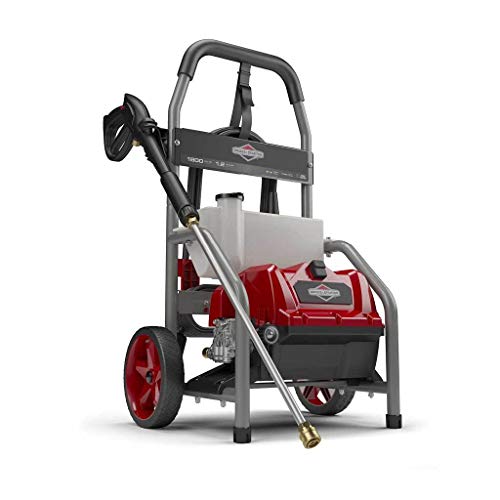
Briggs & Stratton 1800 PSI Electric Pressure Washer
Best for: Light cleaning tasks and compact storage
- Maximum Pressure
- 1800 PSI
- Flow Rate
- 1.2 GPM
- Power Source
- Electric
- Hose Length
- 20 feet
- Dimensions
- 15.5 × 18.8 × 34.5 inches
- Weight
- 26.5 pounds
View on Amazon: Briggs & Stratton 1800 PSI Electric Pressure Washer Affiliate link
The Briggs & Stratton 20680 delivers 1800 PSI and 1.2 GPM for electric cleaning tasks. Its upright design measures 18.8 by 15.5 by 34.5 inches and weighs 26.5 pounds. You get 20 feet of hose for reach and an integrated detergent tank for soap application. This unit suits users needing moderate power and a durable frame for home maintenance.
Pros
- 1800 PSI maximum pressure
- 1.2 GPM flow rate
- 20 feet of flexible hose
- Integrated detergent tank
- Durable frame construction
Cons
- Lower pressure than the 1500 PSI upright competitor
- No wheels listed for transport
- Fixed hose length limits reach
Good fit if
- You need moderate pressure for patios and siding
- You want a compact upright unit for storage
- You prefer soap application via a built-in tank
Skip if
- You require high pressure for heavy deck stripping
- You need a wheeled cart for easy movement
- You want a longer hose for large areas
Verdict: Briggs & Stratton 1800 PSI 1.2 GPM Electric Washer offers solid performance for light to medium jobs. You should buy it if you value a compact upright design and built-in soap mixing over raw power.

Greenworks 1500 PSI Upright Electric Pressure Washer
Best for: small patios and light cleaning tasks
- Maximum Pressure
- 1500 PSI
- Flow Rate
- 1.2 GPM
- Hose Length
- 20 ft
- Nozzle Count
- 2
- Dimensions
- 18.5 × 10.3 × 8.74 inches
- Weight
- 12 pounds
View on Amazon: Greenworks 1500 PSI Upright Electric Pressure Washer Affiliate link
This Greenworks unit delivers 1500 PSI at 1.2 GPM. It features a 20 ft hose and 35 ft cord with inline GFCI. The upright design measures 10.3 by 8.74 by 18.5 inches and weighs 12 pounds. It includes two nozzle tips and a detergent bottle. PWMA certification confirms its performance standards for light cleaning tasks.
Pros
- 1500 PSI and 1.2 GPM output
- 35 ft power cord with inline GFCI
- Upright design for stability
- Includes soap applicator and two nozzles
- PWMA Certified
Cons
- 1500 PSI is lower than the 2000 MAX PSI on the list
- 20 ft hose limits reach compared to longer options
- 12 pound weight requires carrying for storage
Good fit if
- You need a compact unit for small patios
- You prefer upright storage to save space
- You want PWMA certified performance for light dirt
Skip if
- You require high pressure for heavy grime
- You need a longer hose for large areas
- You prefer a gas-powered engine for mobility
Verdict: Greenworks 1500 PSI Upright Pressure Washer fits users with small outdoor areas who value compact storage and certified reliability over raw power. It is a solid option for routine maintenance on decks and walkways.
Specifications side by side
| Spec | Briggs & Stratton 1800 PSI Electric Pressure Washer | Greenworks 1500 PSI Upright Electric Pressure Washer |
|---|---|---|
| Maximum Pressure | 1800 PSI | 1500 PSI |
| Flow Rate | 1.2 GPM | 1.2 GPM |
| Power Source | Electric | not stated |
| Hose Length | 20 feet | 20 ft |
| Nozzle Count | not stated | 2 |
| Pressure | 1800 PSI | 1500 PSI |
| Dimensions | 15.5 × 18.8 × 34.5 inches | 18.5 × 10.3 × 8.74 inches |
| Weight | 26.5 pounds | 12 pounds |
| Size | 1800 psi 1.2 Gallon | 1500 PSI (Upright) |
| Color | Red/Gray/Titanium | 1500PSI |
| Model | 20680 | GPW1501 |
Frequently asked questions
Which pressure washer is lighter and easier to store?
The Greenworks unit is significantly lighter. It weighs only 12 pounds, while the Briggs & Stratton model weighs 26.5 pounds. This makes the Greenworks easier to carry upstairs or into a small shed. Its compact dimensions also allow it to fit into tighter storage spaces compared to the bulkier Briggs & Stratton design.
Does either model have a built-in soap dispenser?
The Briggs & Stratton 1800 PSI model features built-in soap mixing. This allows you to apply detergent directly without needing a separate bottle attachment. The Greenworks specifications do not mention a built-in soap system, so you may need to use a separate nozzle or bottle for applying cleaning solutions.
Are both pressure washers electric?
Yes, both machines run on standard household electricity. They do not require gasoline or oil. This makes them quieter and easier to maintain than gas-powered models. You simply plug them into a standard outlet to begin cleaning your driveway, patio, or siding.
Which model is better for delicate surfaces?
The Greenworks 1500 PSI model is gentler on delicate surfaces. Its lower pressure output reduces the risk of damaging paint or soft wood. The Briggs & Stratton offers higher pressure, which is better for tough grime but may be too aggressive for fragile materials like old deck boards or vinyl siding.
How do the water flow rates compare?
Both pressure washers share the same flow rate of 1.2 gallons per minute. This means they deliver water at the same speed. The difference in cleaning power comes from the pressure PSI, not the water volume. You will get similar rinsing speeds with either machine.
What are the physical dimensions of the Greenworks washer?
The Greenworks unit measures 10.3 inches in width, 8.74 inches in height, and 18.5 inches in length. Its small footprint makes it easy to maneuver around tight corners. The Briggs & Stratton is much larger, measuring 18.8 inches wide and 34.5 inches tall.